

Hibachi vs Teppanyaki: What’s the Real Difference?
Why People Confuse Hibachi and Teppanyaki
If you’ve ever been to a Japanese restaurant in the U.S. where chefs flip shrimp into their hats or create fiery onion volcanoes, you probably thought you were enjoying hibachi. But chances are, you were actually at a teppanyaki restaurant.
In America, the terms hibachi and teppanyaki are often used interchangeably, mainly due to branding and cultural adaptation. Restaurants frequently label themselves as “hibachi grills” even when their cooking equipment and style align more closely with teppanyaki. This creates confusion, but understanding the real distinctions can help you appreciate both traditions.
What Is Hibachi?
Traditional Hibachi Cooking in Japan
In Japan, hibachi (literally “fire bowl”) refers to a small, charcoal-heated cooking device. It was traditionally made from ceramic or metal and used to provide warmth or cook simple foods like skewers and grilled vegetables.
Key characteristics:
- Uses charcoal as a heat source
- Compact, open-top grill
- No chef performance — purely functional
This style of cooking is rarely used in Japanese restaurants today and is more of a cultural relic or specialty cooking method.
What Hibachi Means in the U.S.
In American dining, the word “hibachi” has evolved to describe chef-led experiences that are actually teppanyaki-style performances. The term became a catch-all, largely for marketing purposes, because “hibachi” was easier for diners to remember and say.
So when you hear “hibachi restaurant” in the U.S., you’re almost always experiencing teppanyaki — not traditional hibachi.
Learn more about the history of hibachi
What Is Teppanyaki?
Teppanyaki Cooking Style Explained
Teppanyaki comes from the Japanese words teppan (iron plate) and yaki (grill). It involves cooking food on a large flat-top iron griddle, where the chef doubles as an entertainer.
You’ll typically see:
- Knife tricks and utensil flair
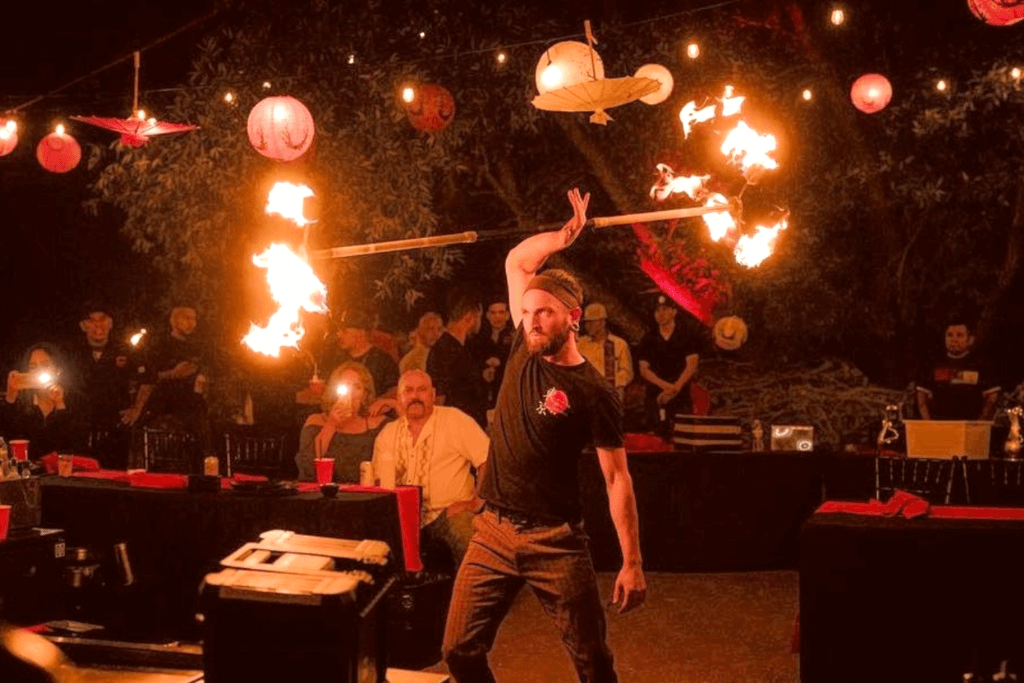
- Fire shows and flame towers
- Real-time interaction with guests
- A focus on meat, seafood, noodles, and stir-fried vegetables
Teppanyaki in Restaurants
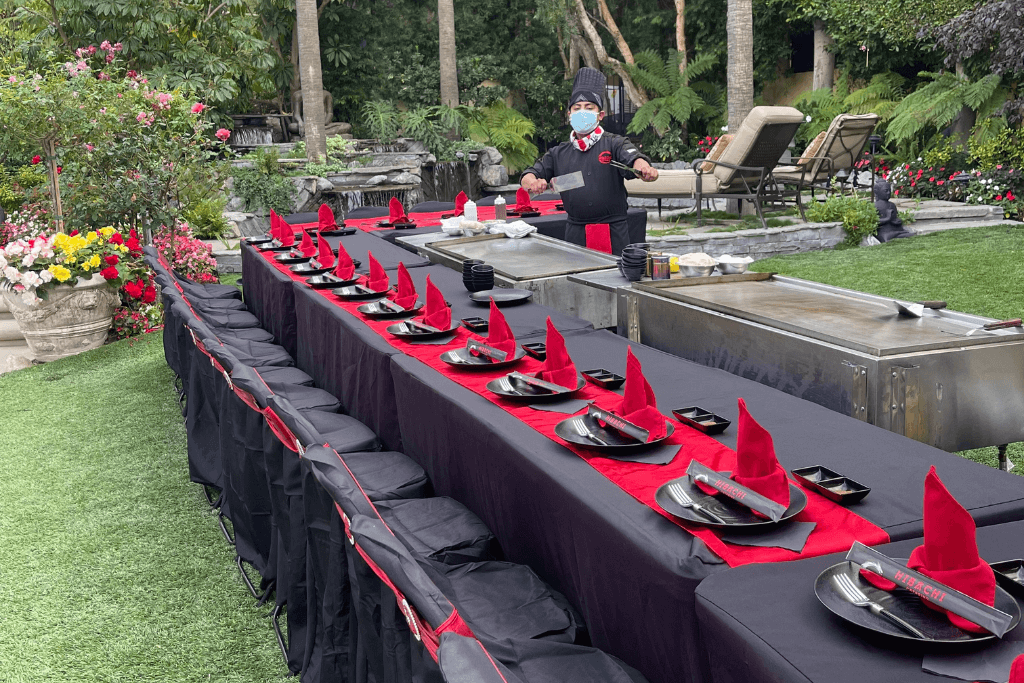
The classic teppanyaki restaurant experience includes group dining around a communal grill with a trained chef at the center of it all. This makes it ideal for birthdays, celebrations, and team events — blending food and entertainment in one unforgettable package.
Explore hibachi vs teppanyaki in detail
Hibachi vs Teppanyaki: Side-by-Side Comparison
| Feature | Hibachi (Traditional) | Teppanyaki (Modern) |
| Heat Source | Charcoal | Propane or electric griddle |
| Cooking Surface | Small open grill | Flat iron plate (teppan) |
| Experience | Home or casual grilling | Performance-driven dining |
| Cultural Accuracy | Japanese original | American interpretation |
| Common Ingredients | Skewers, simple meats | Steak, shrimp, noodles, veggies |
This table clarifies the most common questions — and is often featured in search results when people ask about the differences between hibachi and teppanyaki.
Which One Do You Actually Get at Restaurants?
In the U.S., you’re almost always getting teppanyaki, even when the sign says “hibachi.” The chef, the grill, the performance — it’s all teppanyaki-style.
That’s not a bad thing — teppanyaki is fun, social, and delicious. However, it’s essential to understand the authentic origins of each term so you can make informed choices or impress your foodie friends.
Hibachi vs Teppanyaki for Catering & Home Events
When it comes to mobile catering or backyard celebrations, teppanyaki wins — hands down.
Why?
- Flat grills are portable and easy to set up
- The experience thrives in open-air party settings
- Guests love the interactive chef performance
- It offers both dining and entertainment in one
Whether it’s a birthday or corporate gathering, teppanyaki-style catering brings excitement right to your home.
Learn what hibachi mobile catering includes
See hibachi catering for all occasions
Honoring Tradition Through Flavor and Technique
While the hibachi vs teppanyaki debate often centers on visual performance, the roots of these cooking methods lie in centuries-old Japanese cooking techniques and the pursuit of flavor through simplicity. The original hibachi used a charcoal grill, typically cast in iron, designed to sear food with smoky intensity—perfect for dishes like grilled vegetables or shrimp tails enhanced with just a touch of soy sauce.
Teppanyaki, by contrast, brought these traditions into the spotlight with theatrical flair—from flaming oil to the famed onion volcano, where ingredients like fried rice and sliced steak are prepared with interactive, precision-based flair. Though the Heian period marked the origin of traditional hibachi, modern Japanese steakhouses have redefined the experience into a sizzling stage of interactive dining, bridging flavor with entertainment.
Whether you’re craving that perfect dining experience or planning an event that blends authenticity with excitement, understanding these details helps you savor more than just the food—it helps you appreciate the culture behind it.
Final Takeaway
While “hibachi” and “teppanyaki” are often mixed up in the U.S., they’re very different in origin and style. Hibachi is a traditional Japanese grill, while teppanyaki is a modern, performative cooking experience.
Both have their place — but when you book that exciting chef-at-your-house dinner? That’s teppanyaki.
Book Hibachi Catering for your next unforgettable event.