

What Exactly Is Hibachi?
At its core, hibachi refers to a style of cooking rooted in Japanese tradition. The word “hibachi” (火鉢) literally translates to “fire bowl,” originally describing a small container used to hold burning charcoal for heat or cooking.
In traditional Japanese culture, a hibachi was not the flat iron grill we know today, but more of a brazier. However, over time—especially in Western culture—the term has evolved. In the U.S., hibachi has come to mean not just the equipment, but also an entire dining experience that combines sizzling food with chef-performed entertainment.
So when people in Los Angeles or across California say, “Let’s have hibachi tonight,” they’re talking about modern hibachi cooking—a fusion of grilled meats, flying spatulas, and flaming onion volcanoes, all performed tableside.
To explore how the concept evolved, check out the history of hibachi.
The True History of Hibachi
The origins of hibachi date back hundreds of years to Japan, where small charcoal burners were used to cook or heat food in homes. These were nothing like the large steel grills used today.
When did hibachi enter American dining culture? It actually started with the rise of teppanyaki in Japan, which introduced flat-iron cooking to restaurants in the 20th century. Japanese steakhouses brought the concept to the U.S. after WWII, blending elements of performance and grilling together.
Eventually, the terms hibachi and teppanyaki were used interchangeably in the West, despite being quite different. Let’s break that down.
Hibachi vs. Teppanyaki — What’s the Difference?
Cooking Equipment Differences
- Hibachi grills traditionally use charcoal and have open grates.
- Teppanyaki grills are solid iron plates powered by propane, designed for high-heat surface cooking.
Cooking Styles and Chef Techniques
- Hibachi involves simpler grilling techniques, ideal for skewered meats and vegetables.
- Teppanyaki chefs dazzle with knife skills, flipping shrimp tails into their hats and creating flaming onion volcanoes.
Why Americans Confuse the Two
Thanks to the popularity of Japanese steakhouses like Benihana, teppanyaki-style performances came to be known as “hibachi” in the U.S.—and the term stuck.
To dig deeper into this topic, read Hibachi vs teppanyaki.
What Happens During a Hibachi Dining Experience?
The Chef’s Performance
Expect a thrilling show: flipping utensils, egg juggling, rice hearts, and fire-breathing onion volcanoes are all part of the magic. The hibachi chef is part cook, part performer, and all entertainment.
What Gets Cooked
You’ll find a mix of proteins and veggies:
- Steak
- Shrimp
- Lobster
- Chicken
- Hibachi noodles
- Fried rice
- Zucchini, onions, carrots, mushrooms
Fire Show & Entertainment
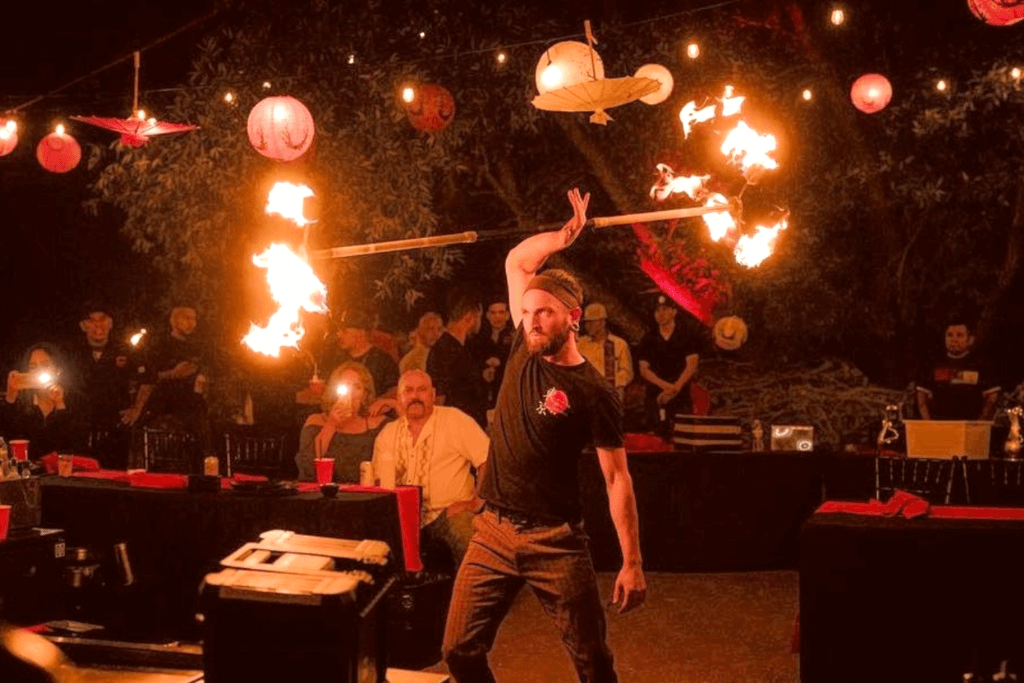
The experience is never complete without flames! For private events, you can even request an added Dragon Fire Show for that unforgettable spectacle.
Want the chef to come to you? Learn more about booking a hibachi chef at home.
Hibachi at Home — The Modern Trend
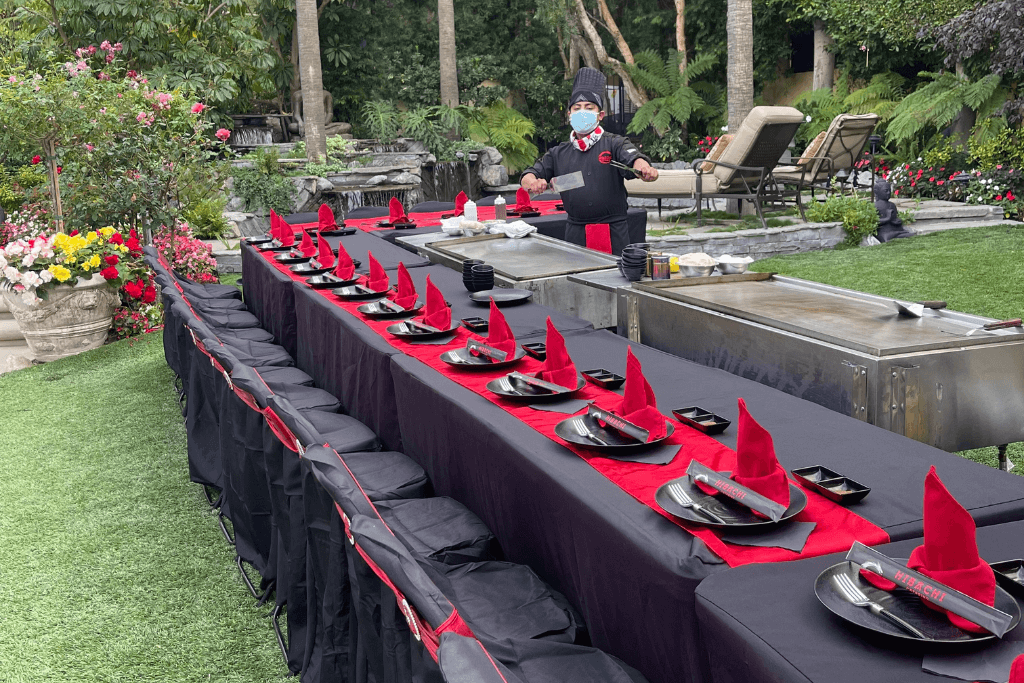
At-home hibachi is redefining how we host celebrations. Think of it as live cooking entertainment combined with delicious food—right in your backyard, driveway, or venue.
Why it’s trending:
- No need to go to a restaurant
- Perfect for birthdays, anniversaries, and corporate events
- Unique and memorable for guests of all ages
Your chef brings:
- Teppanyaki-style grill
- All ingredients
- Cooking utensils
- Entertainment flair
Read more about hibachi mobile catering and catering for all occasions.
How Much Does Hibachi Cost?
Cost Per Person
Most private hibachi catering starts around $50–$80 per person, depending on menu items selected and guest count.
Table Minimums
Typically, there’s a 10-person minimum per booking to ensure setup is worthwhile for the chef and team.
Why It’s More Expensive Than Traditional Catering
You’re not just paying for food—you’re paying for:
- Live cooking
- Chef performance
- Set up and cleanup
- Premium ingredients
Find more details in:
How Many People Can Sit at a Hibachi Table?
Typical setups allow 8–10 people per hibachi grill table, but mobile setups are flexible. Multiple grills can be set up for larger events.
Learn more about hibachi grill table seating.
How Long Does a Hibachi Dinner Take?
The average hibachi dinner lasts about 90 minutes to 2 hours.
Factors affecting timing:
- Number of guests
- Number of chefs/grills
- Complexity of the menu
Restaurant vs. private: Private chefs usually move at a faster, more personalized pace. Learn more here.
What Foods Are Traditionally Served at Hibachi?
Proteins
- Hibachi chicken
- Hibachi steak
- Shrimp, lobster, salmon, and scallops
Vegetables & Sides
- Fried rice
- Hibachi noodles (See full menu)
- Zucchini, mushrooms, onions, and carrots
Sauces
- Yum Yum Sauce
- Ginger Sauce
- Spicy Mayo
What Types of Events Is Hibachi Perfect For?
Birthdays
Celebrate with fire, flavor, and fun—book birthday catering
Anniversaries
Create a romantic, unforgettable dinner for two or a party of 20.
Weddings
Add flair to your rehearsal dinner or late-night wedding reception catering.
Corporate Events
Impress your team with a culinary experience that breaks the ice. See our corporate catering options.
Backyard Parties
Casual fun meets gourmet flair. Explore private dinner parties.
Is Hibachi Healthy?
Hibachi can be a balanced dining option, especially when you opt for grilled proteins and veggies. Many catering companies offer:
- Low-carb modifications
- Sauce on the side
- Extra vegetables
Explore healthy hibachi options for your next event.
Hibachi Catering Near Me
Looking for hibachi chefs in your area? Whether you’re planning a beach party in Los Angeles or a backyard celebration in Temecula, Hibachi Catering LA brings the experience to you.
Service areas include:
- Glendale
- Temecula
- Los Angeles
Exploring the Authentic Roots and Modern Touches of Hibachi
At the heart of every interactive dining experience is the harmony between tradition and innovation—and hibachi cooking is no exception. Rooted in centuries-old Japanese methods, hibachi celebrates a unique Japanese style that emphasizes simplicity, precision, and connection around the cooking surface.
One of the distinguishing features of hibachi is the use of a flat iron plate, which allows the hibachi chef to cook various ingredients right in front of guests. Whether it’s sizzling Wagyu beef, savory short ribs, or delicate miso soup, each bite reflects time-honored techniques passed down through generations of Japanese cooking.
Today, these traditions blend seamlessly with the lively energy of Japanese steakhouses, where the chef’s artistry and theatrical chef performances create lasting impressions. These performances are more than culinary acts—they’re cultural showcases that entertain and educate guests on authentic Japanese cuisine.
For those seeking a richer connection to food culture, hibachi also offers an inside look at Japanese cooking techniques, from knife skills to temperature control. Every flip, flame, and flourish has intention behind it—turning a simple meal into a meaningful moment.
FAQ About Hibachi
What is a hibachi chef called?
In Japanese, it’s “teppanyaki chef,” but in the U.S., they’re commonly known as hibachi chefs.
Why is hibachi so entertaining?
The performance blends fire, humor, interaction, and impressive cooking skills.
How much do you tip a hibachi chef?
Tipping 15–25% is customary. Read our Hibachi chef tipping guide. for more details
Are hibachi and teppanyaki the same?
Not quite! They differ in cooking surfaces, styles, and techniques.
Can you book hibachi for private events?
Absolutely. It’s one of the most popular private party trends today.
Ready to Experience Hibachi at Home?
From flaming onion towers to chef-led excitement, hibachi catering offers a feast for all senses. Whether you’re planning an intimate dinner or a 50-guest celebration, we’ll bring the grill to you.
Book Hibachi Catering and let the unforgettable dining begin.